30 November 2010

Example of a Car-Free Life - "They Live"

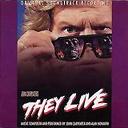
Starting in a freight yard full of moving trains, John Carpenter's "They Live" is a told from the point of view of people who live without a car. From the beginning of the film when a policeman gets out of a car to silence a street preacher, cars are connected with oppression and with power. In fact, the one working class hero of the film who owns a car loses it in the process of learning the truth. Nada, the film's hero, walks throughout the film.

Jonathem Lethem recently put together a slide show analysis of "They Live" on Salon.com based on his book. In it he notes that the movie obviously takes place in Los Angeles, but that L.A.'s car culture is absent. Mr. Lethem may not realize that 25% of Angeleno households are car-free. In fact, the transportation profile of Los Angeles makes it an ideal setting for a movie based on class-conflict as most households that are car-free because the people who live in them are too poor to afford a car. This is different from many other large US cities where many people choose to use transit even though they can afford to buy a car.

And now I have made this movie sound like a serious exploration of Marxism or something when in fact it is a kick-ass action movie. With cheesy aliens. Watch the clip below for one of the best lines in movie history. (WARNING: SPOILERS)


"They Live" is available through Netflix and is showing on AMC on Friday, December 10 at 11 pm.

14 November 2010

ColoRail Member Meeting

The Colorado Department of Transportation has a new Rail and Transit Division, and of course that division has a new director, Mark Imhoff, who was instrumental in getting Denver's first light rail line built.

Mr. Imhoff is coming to the next Colorado Rail Passenger Association Member Meeting. Yay! We might even have the chance to give him suggestions.

We are meeting on Saturday, November 20 at 10:30 at the Englewood Community Center and Library. Mr. Imhoff's section starts at 10:45. At 11:45 the Board will ask the members what they would like us to be working on.

The Englewood Community Center is on light rail line D. Bus routes 0, 12, and 27 come right next to the center.

08 November 2010

Comments on the plans for I-70.

It looks like the plan for I-70 is to build a monorail/maglev on a raised track from Eagle County Airport In Gypsum near Glenwood Springs to the intersection of I-70 and C-470 in Morrison and to widen sections of the highway and some highway intersections. No mention of buses. No mention of possible ways to get people out of the I-70 corridor.

At the public meeting that I attended, fourteen peoplespoke. A majority spoke in favor of improved bus service. I believe only two people supported widening the road in any section.

I am concerned that the raised structure that will be carrying the monorail/maglev is being referred to as an "Advanced Guideway System" when in fact there is nothing inherently advanced it.

Here is the comment that I submitted to the I-70 team:

I am concerned that the rail portion of the I-70 project is being designed for looks rather than usability or even modernity. What makes a train modern is not necessarily the track (rail on steel vs. maglev). A modern train has modern signals. A modern train has a modern dispatch system. A modern train has operators, both on the train, and in the operations offices, who are both well-trained and well-paid. In the last ten years, we have seen new kinds of engines and new kinds of wheels. There are trains that look exactly like the trains of fifty years ago that are wonders of modern engineering. And there are trains that look very modern that in fact don’t work very well and are in fact quite primitive.


As rail systems across the USA are being modernized, Colorado is falling behind. People in Colorado are still being forced to drive as train ridership across the country increases every year. We need a rail system that connects into the nation’s system, and we need a system that serves Colorado’s citizens.


Today is the last day to submit comments.

22 October 2010

Why Don't People Take the Bus?

Sometimes because they don't know there is one available.

On his blog Justin Nelson tells about seeing a bus that he could have taken home from Las Vegas during his drive back. His post is a good source for people who are looking for alternatives to Greyhound for intercity bus service from the Los Angeles area.

15 October 2010

Water Pollution: Cars vs. Transit

Everyone knows that cars produces air pollution, but many people are not aware of the amount of water pollution that they produce. Cars pollute the water ways buy grinding up roads and their own tires; the dust produced runs into waterways when it rains. In addition, the oil used as lubricant is constantly leaking out. In addition, some irresponsible car owners dump used oil directly into storm drains. Overall, more oil is dumped into our nation's waterways than was spilled following the Deepwater tragedy in the Gulf.

Doesn't most of this apply to buses also? Yes, except that most buses transport many, many more people compared to the surface area of their tires and the amount of oil that they use compared to cars. People who maintain buses professionally are much less likely to dispose of used oil improperly.

Trains cause even less water pollution. Train tracks take up less space than roads, and the tracks themselves are made of less toxic materials than asphalt. Train tracks are more water permeable than roads. Permeability matters because this keeps pollutants from pooling in one area. There are many chemicals that are harmless or even beneficial in small quantities are toxic in large concentrations.

For example, if one hundred people take a supplement with 10mg of iron every day, their health may improve. But if only person takes that entire amount, 1g , it would eventually kill them. Covering a large percentage of our cities with concrete and asphalt encourages rainwater to pool in limited areas and for pollutants to also pool in those areas, allowing chemical concentrations to reach dangerous levels.

Public transit not only uses oil more efficiently than cars do, buses and trains use space more efficiently as well. Using space more efficiently leaves us more places for parks and open space.

04 October 2010

I-70 to be widened? get a monorail? better bus service?

Right now the Colorado Department of Transportation is deciding what to do about traffic congestion on I-70. Should we widen the highway, add more bus service, increase the number of trains, build a monorail? Links to the various parts of the actual plan for I-70 can be found at 2010 Revised Draft PEIS. The sections that I read were not written in any known human language, but when they added the Denver meeting maybe they added actual English. Right now it seems that CDOT is proposing to widen I-70 in some places, add bus service, and build a monorail.

As of today (Monday, October 4) there are four public meetings. All meetings start at 5pm with an Open House and an opportunity to submit written comments. At 6pm a presentation starts. After 6:30, the public can submit verbal comments until 8pm. Current information is available at I-70 Mountain Corridor. I will list each meeting as I learn about it along with information about how to get there on public transit.

Tuesday, October 5, Silverthorne
Silverthorne Pavilions
400 Blue River Parkway
Silverthorne Pavilions is two blocks east on Fourth of the Silverthorne Transfer Center. Hourly free buses run around downtown Silverthorne and to Frisco, Dillon, Keystone until well past the end of the meeting. There does not seem to be any bus service to most of the residential areas of Silverthorne.

Wednesday, October 6, Clear Creek County
Clear Creek County High School
185 Beaver Brook Drive
Technically, this is in Evergreen, but it is nowhere near what people think of as the city of Evergreen, and is far outside of the RTD's service area. There is no bus service to this location. (Poor kids)

Thursday, October 7, Eagle
Eagle County Fairgrounds
0426 Fairgrounds Road
ECO Transit provides bus service within Eagle County. I am not sure which bus stop is the closest, but it is possible to walk to the meeting location along 5th Street from the Eagle County Building stop. Buses run through downtown Eagle to Vail, Avon, Edwards, and Gypsum. A roundtrip costs the same as a day pass ($8), so I recommend getting the pass just in case. In the evening, buses run more frequently to Gypsum (hourly) than to Vail, Avon and Edwards (every two or three hours). You have to call 970-328-3520 two hours in advance for pickup from some locations, but not for any downtown stops.

Thursday, October 21, Denver
CDOT Headquarters, Auditorium
4201 East Arkansas Avenue
CDOT Headquarters are located one block east of Colorado Boulevard between Louisiana and Arkansas Avenues. On Google Maps it looks like you can enter from both Louisiana and Arkansas, which is good because the 40 stops on Louisiana. The 79 runs along E. Florida to both the University of Denver and Nine Mile Light Rail Stations. This bus also stops on Colorado, although Bellaire may be a closer stop for people coming from the east. The 46 runs along Birch Street. Be careful, though. The last buses for this route come within the half hour after the meeting ends.
Comments can also be submitted online until November 8 at I-70 Mountain Corridor Contact Form.

09 September 2010

Does Senator Michael Bennet support funding trains?

I just read on the California High Speed Rail Blog, that Senator Michael Bennet opposes infrastructure spending. I support him if he opposes widening more highways, but it seems that he may oppose stable long-term funding for rail as well.

I think the we as citizens of the US need to invest in jobs. The more people who are working, the higher our tax revenues will be. And if we end our addiction to oil, we won't have to spend billions on wars to get it.