Showing posts with label California. Show all posts

31 March 2011

A Train Story with Two Names

Color of a Brisk and Leaping Day: A Fateful Year in Life of John Lee, Railroad Man is a fantasy based on the efforts of 18-year-old J.M. McFadden to buy the Yosemite Valley Railway in 1945. In real life, the railway was shut down before passenger rail business had a chance to recover from World War II. In the movie, John Lee, the descendant of Chinese railway worker, manages to borrow enough money to keep the railway open. The movie has a lot of magnificent train and scenery shots which the black and white film actually makes more interesting. The choice to film is black and white also helps integrate the historical footage the director found. The director and writer, is more interested in scenery than in the actual running of the railroad. The historical footage shows people working, but we never really see the main character actually working. Instead, he spends a lot of time with his girlfriend. Unfortunately, we are not sure where that part of the movie is going either.

Overall, the movie is well acted and has good cinematography for the its small budget, but the writing has no focus. It does make you think about what could have been done with all of the rail lines that have been abandoned since the 1945. John Lee's plans seem like they could have worked if he had worked harder. Maybe the director made him that way because making the railway successful would have gone against history.

The writer/director does include two facts of historical interest. First, the Interstate Commerce Commission was instrumental in ending the line. Second, the Yosemite Valley Railway was probably shut down for its rails and other equipment. A.E. Perlman, who bought the railroad and then shut it down to benefit the Rio Grande and Western R.R., also ripped up track when he was with the New York Central Railroad. However, the director speaks of Americans loving their cars at time when most Americans did not yet have them.

Overall, the movie has the potential to remind of us the role that Asian-Americans have played in our nation's railroad history and of some of the politics that have shaped that history. The skeleton is here for a much better movie. I love movies about people actually working which may be one of the reasons that I love train movies.

14 February 2011

House Committee on Transportation and Infrastructure Holding Public Meetings?

Last week, the chair of the House Transportation and Infrastructure Committee announced a series of public meetings and "field hearings" on upcoming surface transportation legislation. State and local officials and transportation stakeholders are being invited to the "field hearings".

Originally, the idea of the stakeholder was invented to give a way for someone who did not vote in a particular jurisdiction to have a voice in legislation that impacted them. However, it has come to be a way to do an end-run around democracy. After all, the only non-US citizens who should have a voice in our nation's transportation policy are immigrants, but I do not think that is who Mr. Mica wants to hear from.

The first "field hearing" was in Beckley, West Virginia today in the morning at The Theater at Tamarack, One Tamarack Park. There is no transit to this location, not even Amtrak or Greyhound, both of which serve Beckley. Only men have been invited to testify. Only one is an elected official. Two represent individual highways.

A second metting was later in the morning in Charleston, West Virginia. Fortunately, a member of the Friends of the West Virginia Cardinal was able to attend. He said that it went better than expected

I am still looking for information on the other meetings. They are being held within the next ten days, so hopefully more information will be available soon.

30 November 2010

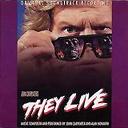
Example of a Car-Free Life - "They Live"

Starting in a freight yard full of moving trains, John Carpenter's "They Live" is a told from the point of view of people who live without a car. From the beginning of the film when a policeman gets out of a car to silence a street preacher, cars are connected with oppression and with power. In fact, the one working class hero of the film who owns a car loses it in the process of learning the truth. Nada, the film's hero, walks throughout the film.

Jonathem Lethem recently put together a slide show analysis of "They Live" on Salon.com based on his book. In it he notes that the movie obviously takes place in Los Angeles, but that L.A.'s car culture is absent. Mr. Lethem may not realize that 25% of Angeleno households are car-free. In fact, the transportation profile of Los Angeles makes it an ideal setting for a movie based on class-conflict as most households that are car-free because the people who live in them are too poor to afford a car. This is different from many other large US cities where many people choose to use transit even though they can afford to buy a car.

And now I have made this movie sound like a serious exploration of Marxism or something when in fact it is a kick-ass action movie. With cheesy aliens. Watch the clip below for one of the best lines in movie history. (WARNING: SPOILERS)


"They Live" is available through Netflix and is showing on AMC on Friday, December 10 at 11 pm.

22 October 2010

Why Don't People Take the Bus?

Sometimes because they don't know there is one available.

On his blog Justin Nelson tells about seeing a bus that he could have taken home from Las Vegas during his drive back. His post is a good source for people who are looking for alternatives to Greyhound for intercity bus service from the Los Angeles area.

09 August 2010

Southern California by Transit

Wondering what you can see or do in southern California without a car. Riding in Riverside has three guides to help you. Most destinations are in Orange or Riverside Counties.


Riverside is the second stop after Los Angeles on the Southwest Chief. It is also on three Metrolink lines that run to Los Angeles, Orange County, and the beach. In fact, if you are at the beach and it rains, you might be able to use this site to to visit one of southern California's historic towns.

(Remember, it is almost always good when it rains in southern California.)

26 May 2010

Guide to Businesses near Light Rail

The Light Rail Network website has maps of businesses around light rail stations in multiple cities. There are also links to rail related news stories.

12 February 2010

Diridon Station, San Jose, CA

Of Interest: downtown San Jose, historic San Jose, HP Pavilion
Lodging: yes
Tourist Office: no
Safe at Night: so-so. Lots of people get on and off here, so you won't be alone. However, the surrounding parking lot creates lots of deserted space to walk through, and I wouldn't describe San Jose as a low crime area.

There is a good map of the area on the Transit Unlimited Wiki. Map of Diridon Station

The station is close to two hotels, both locally owned. The Arena (to the west) is a locally owned budget hotel while the Hotel de Anza is more upscale and dates from 1931. Both are on the same road, although this road is called The Alameda to the west and Santa Clara Street to the east. There are also hotels to the southeast of the station.

Santa Clara Street will take you into the heart of San Jose which itself is the heart of Santa Clara County. The current downtown is to the south of the street while the area where San Jose started is to the north. The downtown is made up of office buildings and public spaces. There is a farmer's market every Friday from May to December. Its route starts at Santa Clara and connects the modern business centers with the old San Jose.

The VTA, San Jose's light rail system, runs through downtown. There is also a light rail station near Diridon Station. The system connects most of the area, including Silicon Valley. Local planners think that there would be more riders if the trains went a little faster, but I the distances in a car-oriented environment are more of problem. One of the busiest stops was within easy walking distance of a supermarket near stops that serve residential neighborhoods.

Diridon Station itself is a major rail hub. Amtrak, Caltrain, and ACE all serve this station.

Amtrak's Capitol Corridor starts here seven times a day. It takes one hour to get to Oakland and three hours to get to the terminus at Sacramento. The Coast Starlight runs through here in each direction once a day. This line starts in Los Angeles, 10 hours away and runs right along the coast before arriving in San Jose. From San Jose it follows the route of the Capitol Corridor to Sacramento before heading on to Portland (20 hours) and Seattle (24 hours).

Caltrain goes north from San Jose to San Francisco which is two hours away. Caltrain connects with the BART if you need to get to the airport. One train in the morning comes into San Jose from Gilroy (forty-five minutes away) and one train goes back in the evening. If you need to get to Gilroy at other times, you can there are buses. Trains are frequent during rush hour, hourly at other times.

The Altamont Commuter Express (ACE) runs a two hour commuter route to Stockton. Three trains come into San Jose in the morning and three trains go back out in the evening on workdays.

San Jose Station was named the Diridon Station in 1994 in honor of former Santa Clara County Supervisor Rod Diridon, a long-time California rail supporter.

11 February 2010

Sacramento, CA


For the first time, I am moving a post from my old blog that has a picture. Yeah!

Of Interest: downtown Sacramento, old Sacramento
Lodging: yes
Tourist Office: yes, in old Sacramento
Safe at night: yes, but watch out for traffic

There are two hotels close to Sacramento Station, but the city makes it a little hard to walk their direction. The hotels are in front to the station to the right, but to cross the street in front of the station, you have to go left from the station. In fact, just to start going in the general direction of the hotels, you have to cross the street three times. You need to cross the street in the crosswalk because the street in front of the station is an entry way to the highway. The cars drive fast, so you need the lights and the crosswalk to keep from dying horribly.

The two hotels nearest the station are to the south of the west part of the station area. Old Sacramento is to the west on the other side of the highway. There is a pedestrian underpass to the south near the Holiday Inn. The historic buildings of Old Sacramento mostly contain restaurants and shops, but the California State Railroad Museum, the Sacramento History Museum, and the Schoolhouse Museum are also on these historic streets. Other museums are located in downtown Sacramento.

Downtown Sacramento's buildings are not as old as those in old Sacramento, but many have some history and are quite attractive. The Capitol is in this area as are multiple office buildings. There are several hotels in this area, the closest of which is about a half an hour's walk from the station.

Luckily, the hotels.com page is accurate for Sacramento. Just look for the Amtrak link under Landmarks.

One of Sacramento's light rail lines stops at the station. Unfortunately, not many people in the area seem to know where it goes.

Sacramento is the last stop for most of the Capitol Corridor trains. The city is three hours from San Jose (7/day) and a little less than two hours from Oakland (16/day). Once a day the train continues on to/comes back from Auburn, an hour away. There are regular thruway buses to Roseville, Rocklin, and Colfax as well as Auburn.

The California Zephyr (to Reno, Salt Lake City, Denver, and Chicago) and the Coast Starlight (Los Angeles to Portland and Seattle) stop here once going each direction daily. Both these trains cover the Capitol Corridor route, although neither stops in Auburn.

20 January 2010

Emeryville, California

Of Interest: rail gateway to the Bay Area
Hotels: yes, expensive
Tourist Office: no

The Emeryville Amtrak station is the main station serving San Francisco with Amtrak buses to and from that city. There are also local buses to one of the BART stations which is actually a quicker way to get to San Francisco.

I think the station is next to an interstate exit. There are several chain hotels within walking distance, all lined up along a single road. To get to this area, you have to walk across the tracks. Because of the size of the parking lots, the walk from one end of the hotel strip to the other is probably quite a hike. Most of the hotels are fairly expensive.

Emeryville is the terminus for the California Zephyr which heads to Chicago. The train passes through Reno, Salt Lake City, Denver, and Omaha. It is one of the most beautiful routes in the Amtrak system, but also one of the slowest and least reliable.

The Coast Starlight, San Joaquin, and Capitol Corridor all pass through Emeryville. By all these routes, Oakland is ten minutes away. The Capitol Corridor is the most frequent service. San Jose is an hour and fifteen minutes in one direction while Sacramento is an hour away in the other. The San Joaquin also passes through several times a day, although not all San Joaquin trains go through Emeryville. It takes an hour and a half to go to Stockton, four hours to get to Fresno, and six hours to get to the other end at Bakersfield.

The Coast Starlight is a long-distance train that passes through once a day in each direction. It goes south to Los Angeles (eleven hours) and north to Portland (eighteen hours) and Washington (twenty-three hours). Like many long-distance routes, the ride is stunning, often right next to the ocean.