Tuesday, June 11 at 9 am
Capitol Building, Room 212
301 S. 2nd Street
Springfield, IL 62706
This location is five blocks from the Springfield Amtrak station and two blocks from the local bus transfer center. Amtrak is only $20 from Chicago, but it will get you there late, at 10:15 am.
It looks like the Republican leadership of the US House Subcomittee on Rail may be backing away from their opposition to improving rail in this country. Or maybe they are just getting more subtle about it. Illinois is one of the few states where Republicans vote support rail and transit, and elected officials from that state will be at this roundtable. It looks like this roundtable will focus on freight.
Showing posts with label Illinois. Show all posts
Showing posts with label Illinois. Show all posts
04 June 2013


31 August 2012
Illinois Moves toward Rail
Last week Governor Quinn signed HB4078 which allows the Illinois Toll Highway Authority to use all of its existing powers to construct railroad tracks. This legislation has many benefits, but one is to create a means to directly compare the benefits of rail and highways. It creates a transportation authority out of one that advocated for a single mode.
Now we need to find a way to put buses on equal footing.
Now we need to find a way to put buses on equal footing.
01 December 2011
Through Colorado Twice by Train (Another Guest Post)
Excerpts from Canyons,
Curveballs and Cornfields
By Jim Loomis
Amtrak’s Train #4, the daily
Southwest Chief, departs Los Angeles on time at 6:45 p.m.,
beginning a two-day, 2,200 mile journey to Chicago. I’ll be leaving the train at Kansas
City, however, to watch the Boston Red Sox in a three-game series
with the Kansas City Royals. It’s my annual summer indulgence of
train travel and baseball.
As soon as the conductor collects
tickets, it’s straight to the dining car for dinner. By the time I
get back to Bedroom 2 in Sleeping Car 31, the bed is made up and
waiting. San Bernardino is behind us, Barstow is just ahead, and all
of Arizona slides quietly by during the night.
Dawn finds the Southwest Chief
crossing a New Mexico desert. We’re in the land of mesas now,
some off in the distance, others in our path and causing the train to
slow as it twists and turns through canyons separating these massive
obstacles. Many have Jeep-sized boulders scattered up and down their
flanks.
Just after a leisurely breakfast in the
dining car, the Chief eases to a stop at Gallup, New Mexico.
The town’s main street – at least the one seen from the train –
is a collection of small buildings of stucco or adobe topped with
large signs, most promoting Indian jewelry and crafts. One offers a
startling opportunity for one-stop shopping: “GUNS & LIQUOR.”
Today the landscape east of Gallup is a
desert in name only for there has clearly been a lot of rain
recently. The wild grasses are green, there are large pools of
standing water, and the usually dry stream beds that crisscross the
landscape are running with brown water. The train sweeps around a
long graceful curve and passes a dozen horses, including two
spindly-legged foals, who look up for a moment, then resume their
grazing.
Lamy, New Mexico, is the station stop
for Santa Fe, the state’s capital, and a dozen or so people get
off. Santa Fe is quaint and interesting and very old, dating back to
the Spanish explorers who settled here in 1607, more than a decade
before the pilgrims stepped off onto Plymouth Rock.
Leaving Lamy, the train climbs up
through Apache Pass, a narrow, twisting cut in the mountains with
steep red-rock sides. Once through, we’re again crossing grassland,
home to several small herds of pronghorn antelope. Off and on for the
next several hours, a rutty dirt path runs alongside the tracks –
the original Santa Fe Trail.
Near Trinidad, Colorado, four men on
horseback are coaxing a dozen steers into the back of a large
semi-trailer truck. They stop for a moment to watch the train pass
and one lifts his dusty cowboy hat rather grandly in response to
waves from passengers in the lounge car.
The Southwest Chief pulls into
the Kansas City station on time the next morning. It’s only 7:30,
but it’s already hot when I step off the train: well over 100
degrees without the hint of a breeze.
I’ve picked a hotel that’s within
walking distance of Kauffman Stadium and it’s full of Red Sox fans
decked out in Boston caps and T-shirts. Checking in just before me is
a father and his young son who have come all the way from Pittsfield,
Massachusetts, to see their team. Three nights later, after the
last-place Royals have somehow managed to win all three games, I
encounter the two of them again in the hotel parking lot. The dad is
trying to console his son. “I know you’re disappointed,” he
says to the boy, “but you might as well get used to it.” Every
serious Red Sox fan knows what he means.
My train-baseball odyssey resumes the
next morning with a five-hour ride to Galesburg, Illinois, once again
aboard the Southwest Chief. East of Kansas City is corn
country, endless rows of man-high stalks running off to the horizon.
The train is really moving now, over 80 miles an hour, flashing
through a small town every ten minutes or so. Most are just clusters
of a few weathered buildings, but the defining feature of each little
community is the water tower, a huge tank perched on 100-foot-high
legs and emblazoned with the name of the town it serves: Marceline,
La Plata, Wyaconda, Argyle.
Where there’s corn there are birds:
black and white magpies, ducks, swallows, and a swarm of small
dark-feathered starlings darting in and out through the exposed
rafters of an abandoned barn. And settled comfortably in some soft
green grass not 50 feet from the tracks, a flock of Canada geese
ignore the train as it thunders by.
Fort Madison is the Southwest
Chief’s last port-of-call before leaving Iowa and crossing the
Mississippi River into Illinois. From here it’s another hour to
Galesburg, where I’ll stop for tonight. There’s a lot of history
in these parts. Abe Lincoln and Steven Douglas held one of their
debates on a street corner right here in Galesburg. A plaque in the
sidewalk marks the spot.
(After a stop to see the baseball field that inspired the film "Field of Dreams", Jim picks up the California Zephyr at Burlington, IA.)
Tonight in the dining car the table is
shared with two sisters, both teachers from New York City enjoying
their first cross-country train ride. Proving the theory that
everybody has at least one interesting story to tell, it turns out
that their father was the chief electrician at the old Polo Grounds
in New York, home of the New York Giants baseball team until it moved
to San Francisco. The older sister says her father installed some
special wiring behind the center field bleachers which he thought
could have been used for a signaling system to tell Giant batters
what pitches were coming. Conspiracy theorists have suspected that
nefarious plot ever since the Giants won the National League pennant
in 1951 with a dramatic last-inning home run by Bobby Thompson,
although Thompson and others in a position to know have always denied
it.
Within minutes of leaving Denver the
next morning, the Zephyr begins a slow, steady climb into the
Rocky Mountains. Off to the right are the Flatirons, huge slabs of
rock, mountains in their own right, that literally lean up against
the Rockies.
It’s 275 rail miles from Denver to
Grand Junction on Colorado’s Western Slope and along the way we
pass though 43 tunnels. The longest, at 6.2 miles, is the Moffat
Tunnel, boring through the mountains at an elevation of 9,000 feet.
It’s the highest point of the Zephyr’s route and, when we
emerge at the far end, we’ve crossed under the Continental Divide.
Back on the Denver side of the tunnel, all the water flows east to
the Mississippi River, eventually ending up in the Gulf of Mexico.
From this point forward, water flows west toward the Pacific Ocean.
After brief stops in Winter Park and
Granby, the train begins following the Colorado River, which will be
off to the left for the next 100 miles or so. All along the way it’s
dotted with people floating in a variety of watercraft ranging from
elaborate inflatable imitations of double-hulled canoes to simple
inner tubes. Many of the rafters cheerfully observe a time-honored
tradition: they moon the train as it passes.
A mid-afternoon stop is Glenwood
Springs where the gunfighter Doc Holiday came hoping his lung disease
would benefit from the natural minerals of the springs. It didn’t
and he’s buried here. This is a refueling stop for our twin
locomotives and, although passengers are invited to step off the
train to stretch their legs, the conductor warns everyone several
times over the P.A. system against straying too far from the
platform.
An hour later, with the Zephyr
underway again, a man in his 40s tells the conductor he thinks his
wife was left behind in Glenwood Springs. Sure enough, she’s paged
several times with no response. With
Grand Junction still some 80 miles
ahead, the husband is ping-ponging back and forth between real
distress over his wife’s predicament and near-rage at her
carelessness. The conductor shrugs. “It happens all the time,” he
says.
I hit the jackpot for dinner companions
tonight: a personable young film animator whose parents emigrated to
Australia from Malta and a Japanese doctor doing research on organ
donations in Boston. He, of course, has become a Red Sox fan and we
happily exchange high-fives across the table. But the laws of
probability are really stretched by the fourth person at our table:
Keith Lewin, a 40-year resident of Kailua before moving to Las Vegas
five years ago. Conversation flows all through dinner and it’s well
past dark by the time everyone heads off to their respective
bedrooms.
It’s still hot and dry the next
morning, but no longer desolate. In fact, the vegetation is green and
wild flowers – yellow and purple and white – are growing in
profusion. There’s a lot more wildlife, too: jack rabbits,
antelope, crows, more magpies, vultures soaring overhead and,
floating placidly on a small lake, white pelicans. From his perch on
top of a fence post, a large golden eagle glares at us as we pass.
Cattle by the hundreds are grazing with heads buried almost out of
sight in the tall lush grass.
By late morning, it’s all changed.
The Humboldt River is alongside now, meandering westward through what
has once again become hot, dry country. How hot and how dry? Well, a
few miles from Reno, Nevada, the river simply gives up. It slows
down, spreads out and quietly disappears into the desert.
After leaving Reno, the Zephyr
crosses into California and begins climbing into the Sierra
Nevada mountains. This is where the Donner Party – some 90 men,
women and children – arrived from Indiana in 1846. It was late in
the year, but they nevertheless attempted to cross the Sierras and
were trapped
by heavy snows. By the time a rescue
team reached them, more than half of the party had died. This stretch
of the Zephyr’s route, overlooking the American River Gorge
at an elevation of some 7,200 feet, is appropriately called Donner
Pass.
Less than three hours later, the train
has descended all the way to sea level and by late afternoon the
California Zephyr reaches its final stop at Emeryville, just
across the bay from San Francisco.
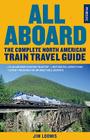
Jim Loomis has crossed the North American continent by train more than twenty times and is the author of All Aboard: The Complete North American Train Travel Guide.
14 February 2011
House Committee on Transportation and Infrastructure Holding Public Meetings?
Last week, the chair of the House Transportation and Infrastructure Committee announced a series of public meetings and "field hearings" on upcoming surface transportation legislation. State and local officials and transportation stakeholders are being invited to the "field hearings".
Originally, the idea of the stakeholder was invented to give a way for someone who did not vote in a particular jurisdiction to have a voice in legislation that impacted them. However, it has come to be a way to do an end-run around democracy. After all, the only non-US citizens who should have a voice in our nation's transportation policy are immigrants, but I do not think that is who Mr. Mica wants to hear from.
The first "field hearing" was in Beckley, West Virginia today in the morning at The Theater at Tamarack, One Tamarack Park. There is no transit to this location, not even Amtrak or Greyhound, both of which serve Beckley. Only men have been invited to testify. Only one is an elected official. Two represent individual highways.
A second metting was later in the morning in Charleston, West Virginia. Fortunately, a member of the Friends of the West Virginia Cardinal was able to attend. He said that it went better than expected
I am still looking for information on the other meetings. They are being held within the next ten days, so hopefully more information will be available soon.
Originally, the idea of the stakeholder was invented to give a way for someone who did not vote in a particular jurisdiction to have a voice in legislation that impacted them. However, it has come to be a way to do an end-run around democracy. After all, the only non-US citizens who should have a voice in our nation's transportation policy are immigrants, but I do not think that is who Mr. Mica wants to hear from.
The first "field hearing" was in Beckley, West Virginia today in the morning at The Theater at Tamarack, One Tamarack Park. There is no transit to this location, not even Amtrak or Greyhound, both of which serve Beckley. Only men have been invited to testify. Only one is an elected official. Two represent individual highways.
A second metting was later in the morning in Charleston, West Virginia. Fortunately, a member of the Friends of the West Virginia Cardinal was able to attend. He said that it went better than expected
I am still looking for information on the other meetings. They are being held within the next ten days, so hopefully more information will be available soon.
28 December 2010
Chicago-St. Louis high-speed line is actually under construction
In September, the state of Illinois started upgrading a ninty-mile stretch of track between Alton and Lincoln. Earlier this week that state, the US Department of Transportation, Amtrak, and the Union Pacific Railroad announced that they had come to an agreement that would allow the trains to run on time AND allow significant freight traffic in the corridor. The next phase of construction will start in the spring when the track between Lincoln and Alton will be upgraded. All upgrades should be done in the spring.
27 August 2010
Chicago
Of Interest: downtown Chicago which includes the theater district, the Chicago Board of Trade, museums, and several universities
Hotels: Of course, at all prices and qualities
Grocery Store: Several small markets downtown. A Whole Foods is visible from the tracks, but not from the station.
Other Transit: City buses run by the station. Buses in Chicago run in a grid pattern. An El station is a short walk to the north. The loop is across the bridge. Just walk straight ahead. Besides the "L", multiple bus lines also end at the loop
ATM: in station
Lockers: yes, but $3.00/an hour
Chicago's original downtown is the to east of the station. Many commercial offices have moved north to the Golden Mile, but the futures market, the Chicago Board of Trade, is still here. Most of this area is now devoted to shopping. Chicago's theater district is to the northeast of the station while bars that serve the student population are to the southeast. The lake, and the park that runs along it, is a 30 minute walk to the east.
If you are walking to the South Loop are, Van Buren is the southmost street you can walk east without having to deal with a highway or a major road. All "L" trains meet at the Loop. The red subway line runs underneath.
Amtrak and Metra trains run from Union Station to neighboring states and the rest of the country.
Chicago is the transfer hub between trains heading east and trains heading west. Daily Amtrak trains run to New York, Washington, DC, San Francisco, Los Angeles, Seattle, Portland, Dallas, and New Orleans and all major locations in between. Amtrak also runs multiple trains within Illinois and to neighboring states. A daily train runs to Indianapolis, IN in six hours. Also daily is train that takes four hours to get to Grand Rapids, MI. Running to the other end of Michigan, a daily train takes seven hours to get to Port Huron while three trains a day run to Detroit in five and a half hours. These two lines split at Battle Creek which is three hours from Chicago.
Trains run twice daily to Quincy, IL (four and a half hours). Along the way they stop in Galesburg where Illinois service splits from the California Zephyr and the Southwest Chief. Lincoln Service runs four times a day along the Texas Eagle route to St. Louis, five and a half hours away. The last stop within Illinois is Alton. Carbondale is also five and a half hours away, although this train runs less often, three times a day, and follows the route of the City of New Orleans.
Probably the most frequent interstate train coming out of Chicago is the Hiawatha which runs seven times a day in each direction, taking an hour and a half to get between Chicago and Milwaukee. This route parallels the Empire Builder and Metra's Milwaukee District North Line.
Metra operates eleven train lines into Illinois suburbs to the west, south, and north of Chicago. The last stop of one line, Union Pacific North, is in Wisconsin at Kenosha. Metra does not run to anywhere in Indiana. Six of these lines run from Union Station while another three run from Ogilvie Transportation Center, a short walk to the north. The other two run from stations that are just south of downtown.
Most lines do not connect. Exceptions are the Rock Island and Heritage Corridor lines which both end in Joliet, a little more than an hour away. Only Rock Island runs from Union Station and it is peak hours only in the direction of commuter traffic.
17 May 2010
Restore the North Coast Hiawatha
The North Coast Hiawatha ran from Chicago through Minnesota, southern North Dakota, and southern Montana to Seattle. Amtrak estimates that this route would have over 350,000 riders a year and is currently looking for sources of funding.
Among other places, this route would bring service to the University of Montana in Missoula, Montana. Students there have created a petition, and if you are in one of the states that would be served by this route, you can sign here:
The Bring Back Amtrak website has a map of the proposed route and proposed actions. As more and more people leave cars for other forms of transportation, we need to start moving those subsidies as well.
05 May 2010
More ways to reuse old tickets
Here is another idea for a fun way to recycle your old transit tickets from The North by Northwestern, a blog about student life at Northwestern University in Evanston, IL. This is for those of us who have a lot of old tickets or transit cards.
52 old tickets. Julia Gang suggests making a deck of playing cards. She used CTA (Chicago) cards, but Washington, DC transit cards actually would actually work better. For those who are also readers of my Asian Trains blog, so would Korean train tickets.
You can also make an UNO deck. I think you may be able to do this with only 40 cards.
Julia even has a clever idea for keeping your deck together.
03 April 2010
Galesburg, Illinois
Of Interest: downtown, railway museum, children's museum
Restrooms: yes, cleanliness so-so
Tourist Office: no, but brochures in station. Also, bus map on bulletin board.
Other transit: inter-city buses
Hotels: no, all the hotels are out by the interstate.
Galesburg is are car-oriented town that promotes its free parking while letting its sidewalks deteriorate. Predictably, people in Galesburg complain that there is no parking in Galesburg. There is a good bus map in the station, but bus stops have no markers. There are sidewalks along all streets. Unfortunately, there are not maintained. Even so, Galesburg is small enough that a lot of it is within walking distance. Hotels are near the interstate, about an hours walk from the station.
There is a Dollar General store that has a real grocery store with bulk beans, milk, flour, and other things that you can actually cook with. There are two local theaters. Not cinemas, but real live theater. There are multiple banks, so an ATM should not be hard to find. Galesburg also boasts a wide variety of restaurants. There is health foods store a couple of blocks from the station.
Intercity buses stop at the train station and announced before hand. Like I said, there is a good bus map of the local buses, but they do not stop at the station, and there is no sign to tell you where the nearest stop is.
Three different train routes intersect in Galesburg, the Southwest Chief, the California Zephyr, and Illinois Service to Quincy, IL. Chicago is about two and a half hours away by all routes. There are four trains a day to Chicago, but the Southwest Chief and the California Zephyr are both scheduled to go through Galesburg at approximately the same time. Tickets on the California Zephyr to Chicago cannot be booked online, probably because this train is often late.
Two trains a day go to Quincy, an hour and a half away. The Southwest Chief goes south once a day. It takes this train four and a half hours each evening to get to Kansas City before continuing on through Kansas and southern Colorado to Albuquerque, NM (23 hours) and, eventually, downtown Los Angeles (40 hours).
The California Zephyr also passes through once a day on its way south. Trains are usually still on time at this point. They pass through Iowa before arriving at Omaha, NE, six hours later. The train continues on to Denver(16 hours), the Rocky Mountains, Salt Lake City (32 hours), Nevada, and ends near San Francisco at Emeryville, CA (49 hours).
02 April 2010
On Station Design
Lost in Penn Station by Julia Turner starts with "Penn Station is a confusing place." Her opinion is not unique. Most people consider Grand Central the better of New York City's two major stations. Ms. Turner's article also mentions that Penn Station serves four times as many people than Grand Central.
Which leads to the point of this article: People will use a station if the trains from that station take them where they need to go at the times that they want to travel.
A good station will help people find their train, and provide services that travelers need. A good station is safe. Poor station design makes it difficult for people to find ticket windows and the trains themselves. Poor station design makes people walk across unlit areas and encourages people to walk on the tracks. But the trains are always the most important element. A poorly designed station with many trains will always have more passenger than the best station that only serves one or two routes.
Good station design can help ensure that people who are not used to train travel can successfully buy tickets, print out tickets they have bought online, and get to their trains on time. Good signs can make a well-designed station better and make a poorly designed station tolerable.
One problem is apparent in the photos of the signs in Penn Station, but not discussed in the article. The signs are for the companies that run the trains, not the destinations or type of train. If you don't know what "LIRR" stands for or that Amtrak runs inter-state trains, these signs are not helpful. This reflects the tendency in the US to market bus and train companies rather than buses and trains themselves.
As a previous post mentioned, this a problem for stations in Canada as well.
Subscribe to:
Posts (Atom)